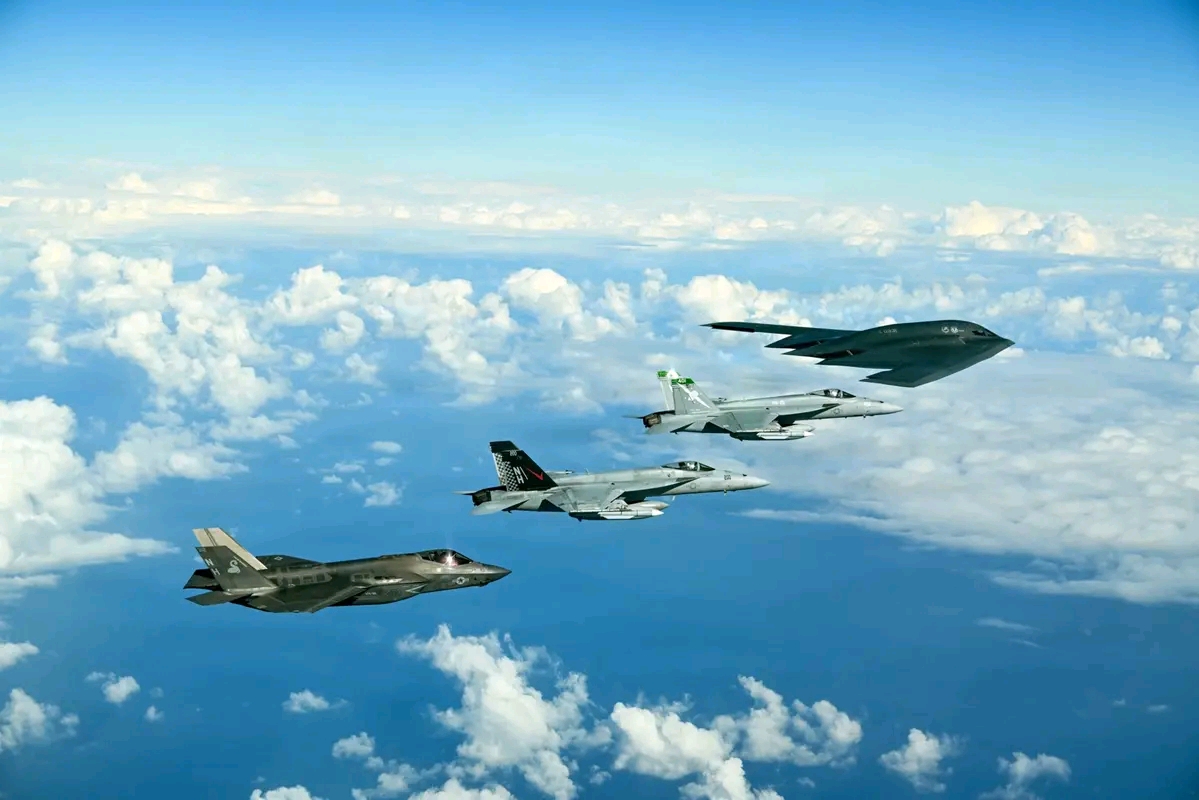
Integrated lethality was on full display as the U.S. military carried out a coordinated maritime strike exercise off the coast of California. During the operation, a U.S. Air Force B-2 Spirit stealth bomber trained alongside U.S. Navy fighter aircraft, demonstrating how different branches of the armed forces can combine their strengths for maximum impact.
The exercise featured the Air Force’s B-2 Spirit working in close coordination with F-35C Lightning II and F/A-18E Super Hornet jets assigned to Carrier Air Wing Eleven. By bringing together long-range strategic bombers and carrier-based strike fighters, the drill showcased a unified approach to modern warfare. Each aircraft type contributes unique capabilities, from stealth and deep-penetration strike power to agile air superiority and precision targeting.
Military officials emphasize that practicing this kind of joint integration strengthens overall readiness. By synchronizing operations between strategic bombers and Navy carrier strike groups, the U.S. aims to refine its ability to project power quickly and effectively across vast distances. These training scenarios are designed to ensure seamless communication, coordination, and execution during complex missions.
Such exercises reflect a broader strategy of innovation within the armed forces. By testing new tactics and refining collaborative methods, the military enhances its flexibility and preparedness in an evolving security landscape. The integration of air and naval assets not only increases operational efficiency but also reinforces the United States’ ability to respond decisively to emerging challenges.